

Health and Wellness Tips for a Better Life
Maintaining good health and wellness is essential for living a happy and productive life. A healthy lifestyle not only improves physical strength but also supports mental and emotional well-being. By following simple daily habits, anyone can improve their overall health and reduce the risk of many diseases.
Living a healthy and balanced life is essential for long-term happiness and productivity. Good health allows people to perform daily activities with energy and confidence while reducing the risk of many illnesses. By adopting simple lifestyle habits, anyone can improve their physical, mental, and emotional well-being. Following the right health and wellness tips for a better life can make a big difference in overall quality of life.
1.Eat Nutritious and Balanced MealsA healthy diet is the foundation of good health. Consuming a variety of nutritious foods provides the body with the essential vitamins and minerals it needs to function properly. Fresh fruits, vegetables, whole grains, lean proteins, and healthy fats should be part of everyday meals. Avoid excessive consumption of processed foods, sugary drinks, and junk food, as they can negatively affect long-term health.
Regular exercise is one of the most important health and wellness tips for a better life. Physical activity helps improve heart health, maintain a healthy weight, strengthen muscles, and increase energy levels. Activities like walking, jogging, yoga, cycling, or swimming can greatly benefit both the body and the mind. Even simple daily movement can help maintain an active lifestyle.
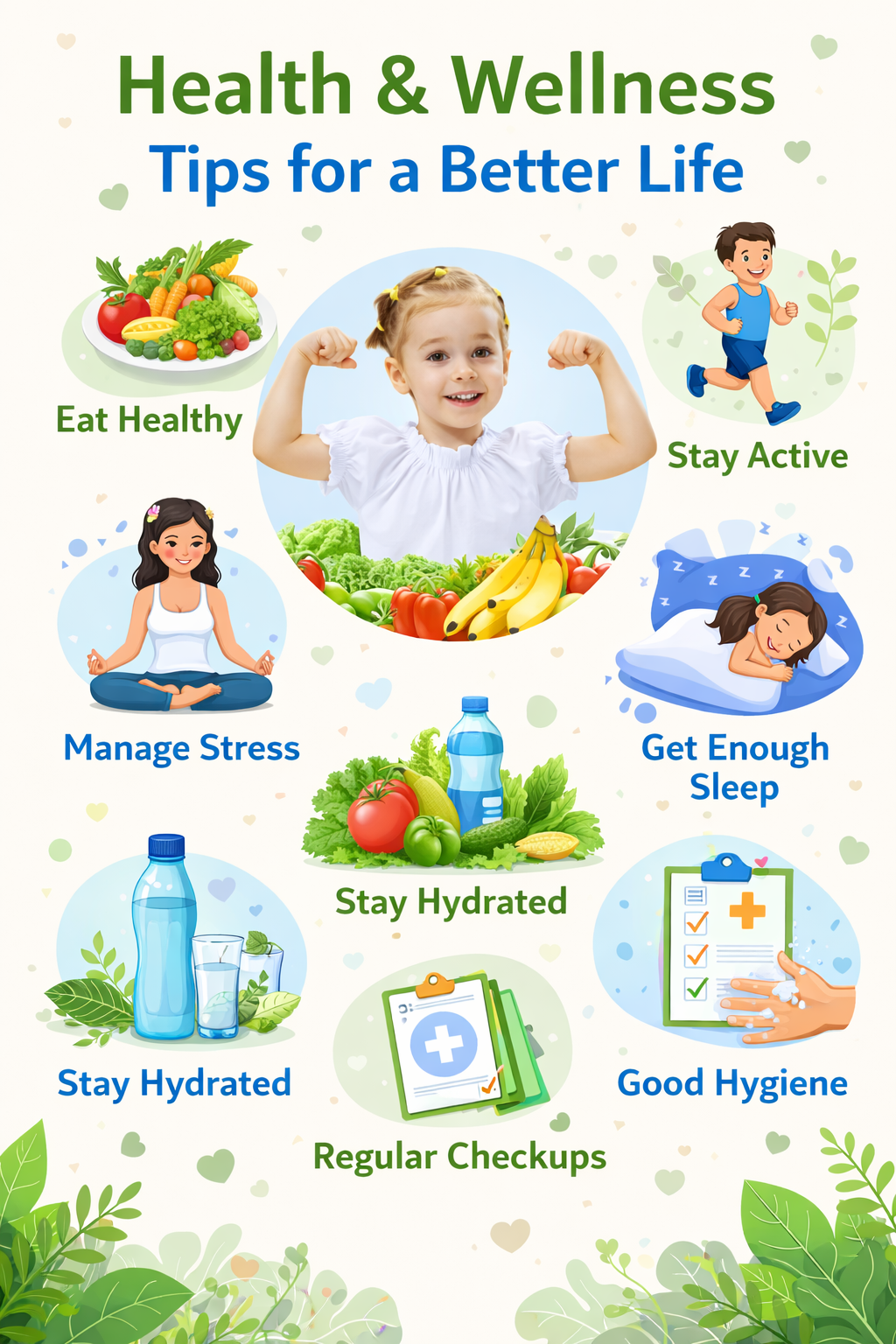
2.Get Proper Sleep & Manage Stress and Mental Health
Sleep plays a vital role in maintaining overall health and wellness. A good night’s sleep allows the body to recover, repair tissues, and restore energy levels. Adults should aim for around 7 to 8 hours of quality sleep every night. Proper sleep improves concentration, mood, and immune system function.
Mental health is just as important as physical health. Managing stress effectively can help prevent anxiety, depression, and other health problems. Relaxation techniques such as meditation, deep breathing exercises, and mindfulness can help calm the mind. Spending time with loved ones and engaging in enjoyable activities also contributes to emotional well-being.Staying hydrated is essential for proper body function. Water helps regulate body temperature, supports digestion, and keeps the skin healthy. Drinking adequate water throughout the day can improve energy levels and prevent dehydration.Personal hygiene is a key factor in preventing diseases and infections. Simple habits like regular hand washing, maintaining oral hygiene, and keeping your surroundings clean can help protect your health and the health of others.
Routine health checkups help detect potential health issues early. Visiting healthcare professionals regularly allows individuals to monitor their health and take preventive measures when needed. Early diagnosis often leads to more effective treatment and better outcomes.Healthy lifestyle habits such as limiting alcohol, avoiding smoking, and maintaining a balanced routine contribute greatly to long-term wellness. Building these habits gradually can help improve overall health and promote a longer, healthier life.
3.Importance of Maintaining a Healthy Lifestyle
Maintaining a healthy lifestyle is essential for long-term well-being and overall happiness. When people focus on good health habits, they can prevent many diseases and improve their quality of life. Following simple health and wellness tips every day helps the body function efficiently and keeps the mind active and positive.
A healthy lifestyle does not require drastic changes. Small improvements in daily habits such as choosing nutritious foods, staying physically active, and getting enough rest can lead to significant health benefits over time.Healthy eating plays a vital role in maintaining good health and energy levels. Consuming fresh fruits, vegetables, whole grains, and lean proteins provides essential nutrients that support body growth and repair. A balanced diet strengthens the immune system and helps prevent chronic diseases such as obesity, diabetes, and heart problems.
Including a variety of colorful fruits and vegetables in meals ensures the body receives vitamins, minerals, and antioxidants that protect against illness. Reducing processed foods and sugary drinks also supports long-term health.Physical activity is a key part of overall wellness. Regular exercise improves heart health, strengthens muscles, and increases flexibility. It also helps maintain a healthy weight and reduces the risk of many lifestyle-related diseases.
Activities such as walking, jogging, cycling, swimming, or yoga are simple ways to stay active. Even small changes like taking the stairs instead of the elevator or going for a short walk every day can greatly improve physical fitness.
Exercise also releases endorphins, which are natural chemicals in the body that help improve mood and reduce stress.
4.Mental Wellness and Emotional Health
Mental Health and wellness is just as important as physical health. A healthy mind helps people cope with daily challenges and maintain a positive outlook on life. Stress, anxiety, and negative emotions can affect both mental and physical health if not managed properly.
Practicing relaxation techniques such as meditation, breathing exercises, or mindfulness can help reduce stress levels. Engaging in hobbies, spending time with family and friends, and maintaining a balanced work-life routine also contribute to emotional well-being.Water is essential for nearly every function in the human body. It helps regulate body temperature, supports digestion, transports nutrients, and keeps the skin healthy. Drinking enough water daily prevents dehydration and keeps energy levels stable.
Experts generally recommend drinking around 6 to 8 glasses of water per day, although individual needs may vary depending on climate and activity level.Developing positive daily habits can greatly improve overall health. Some important habits include:
- Eating meals at regular times
- Getting enough sleep every night
- Practicing good personal hygiene
- Limiting alcohol and avoiding smoking
- Taking regular breaks from screens and technology
These habits help create a balanced routine that supports both physical and mental wellness.
5.Preventive Healthcare and Regular Checkups
Preventive healthcare is an important part of maintaining good health. Regular medical checkups help identify potential health problems before they become serious. Early detection allows doctors to provide timely treatment and guidance.
Health screenings, vaccinations, and routine doctor visits ensure that individuals stay informed about their health status and take the necessary steps to stay healthy.
Following simple health and wellness tips can lead to a healthier and more fulfilling life. By focusing on nutritious eating, regular exercise, proper sleep, stress management, and preventive healthcare, individuals can improve their physical and mental well-being.
A healthy lifestyle is built through consistent habits and positive choices. By making health a daily priority, people can enjoy increased energy, better productivity, and a longer, happier life.
A well-planned daily routine plays an important role in maintaining good health and wellness. When people follow a consistent schedule for eating, exercising, working, and sleeping, the body functions more efficiently. A structured routine helps maintain energy levels and reduces unnecessary stress.
Starting the day with healthy habits such as drinking water, stretching, or going for a short walk can positively influence the rest of the day. Over time, these small habits contribute to a healthier lifestyle and improved productivity.Monitoring your health regularly helps you stay aware of your body’s condition. Checking blood pressure, blood sugar levels, and body weight can provide valuable insights into your health status. Early awareness allows individuals to make lifestyle adjustments and prevent potential health issues.
Regular health monitoring is especially important for people with existing health conditions. By keeping track of their health indicators, they can manage their conditions effectively and maintain a better quality of life.The food we eat directly affects our energy levels throughout the day. Eating nutritious foods provides the body with fuel to perform daily activities efficiently. Meals rich in complex carbohydrates, proteins, and healthy fats help maintain stable energy levels and prevent fatigue.
Skipping meals or consuming too many processed foods can lead to low energy and poor concentration. Maintaining balanced meals and healthy snacks helps the body stay active and focused.Spending time outdoors offers many physical and mental health benefits. Fresh air and sunlight help improve mood and increase vitamin D levels in the body. Outdoor activities such as walking in parks, gardening, or playing sports promote physical activity and reduce stress.
Being in nature also helps improve mental clarity and emotional well-being. Even short periods of outdoor activity can have a positive impact on overall health and wellness.
6.Building Strong Immunity
A strong immune system protects the body from infections and diseases. Healthy lifestyle choices such as balanced nutrition, regular exercise, sufficient sleep, and proper hydration help strengthen the immune system.
Including immune-boosting foods like citrus fruits, leafy vegetables, nuts, and seeds in the diet can support the body’s natural defense system. Maintaining cleanliness and good hygiene also helps prevent the spread of infections.Maintaining a proper balance between work and personal life is essential for overall wellness. Overworking and lack of rest can lead to stress, fatigue, and burnout. Setting boundaries between work and personal time helps individuals maintain better mental health.
Taking breaks, spending time with loved ones, and engaging in relaxing activities can improve emotional well-being and reduce stress levels.A positive mindset plays a significant role in maintaining overall health and wellness. Positive thinking helps individuals cope with challenges and maintain motivation during difficult times. Practicing gratitude, focusing on personal achievements, and setting realistic goals can help build a positive outlook.
People with a positive mindset often experience lower stress levels and better emotional stability, which contributes to better overall health.
Following simple health and wellness tips for a better life can lead to long-term physical and mental well-being. Healthy eating, regular exercise, stress management, proper sleep, and maintaining positive habits all contribute to a balanced lifestyle.
By making small but meaningful lifestyle changes, individuals can significantly improve their health, increase their energy levels, and enjoy a more fulfilling life. Health and wellness should always be a priority because a healthy body and mind create the foundation for happiness and success.
7.The Importance of Health Benifits

Starting the day with healthy morning habits can greatly improve overall health and wellness. A good morning routine sets a positive tone for the entire day. Simple practices like waking up early, drinking a glass of warm water, stretching, and eating a healthy breakfast can boost energy and improve focus.
Many health experts recommend beginning the day with light physical activity such as walking or yoga. This helps increase blood circulation, improves mood, and prepares the body for daily activities. A calm and organized morning routine can also reduce stress and increase productivity.Developing healthy eating habits is essential for maintaining long-term wellness. Instead of skipping meals or eating unhealthy snacks, individuals should focus on balanced meals that include vegetables, fruits, whole grains, and protein sources.
Eating smaller portions at regular intervals can help maintain proper digestion and stable energy levels. Avoiding excessive sugar, fried foods, and processed meals can reduce the risk of obesity and other lifestyle diseases.
Healthy eating not only improves physical health but also enhances mental clarity and emotional stability.Physical fitness is an important component of a healthy lifestyle. Regular exercise strengthens the heart, improves muscle tone, and increases endurance. It also helps maintain a healthy weight and reduces the risk of serious diseases.
People do not need to engage in intense workouts to stay healthy. Simple activities such as walking, stretching, cycling, or participating in sports can provide significant health benefits. Consistency is more important than intensity when it comes to maintaining physical fitness.
Regular physical activity also improves sleep quality and boosts self-confidence.
8.Importance of Mental Relaxation
In today’s fast-paced world, mental relaxation is necessary for maintaining overall wellness. Continuous work and stress can negatively affect both physical and mental health. Taking time to relax helps refresh the mind and improve emotional balance.
Practices such as meditation, deep breathing, reading, listening to music, or spending time in nature can help reduce stress and improve mental health and wellness. Relaxation techniques allow the mind to recover from daily pressures and maintain a positive outlookStrong social relationships are important for emotional health and overall well-being. Spending time with family, friends, and loved ones provides emotional support and reduces feelings of loneliness.
Healthy social connections encourage positive communication, build trust, and create a sense of belonging. Participating in community activities or group events can also improve happiness and mental wellness.
People who maintain strong social connections often experience better emotional stability and reduced stress levels.In the digital age, excessive screen time has become a common problem. Spending long hours on mobile phones, computers, or television can affect both physical and mental health. It may lead to eye strain, poor posture, and reduced physical activity.
Limiting screen time and taking regular breaks can help protect eye health and improve overall wellness. Engaging in offline activities such as reading books, exercising, or spending time outdoors can create a healthier lifestyle balance.Self-care is an essential part of maintaining health and wellness. Taking time to care for your physical, emotional, and mental needs helps improve overall well-being. Self-care activities may include relaxation, exercise, healthy eating, and pursuing hobbies.
Practicing self-care regularly helps individuals manage stress, improve mood, and maintain a positive lifestyle. It reminds people to prioritize their health and take necessary steps to maintain balance in life.
9.Final Thoughts on Health and wellness
Living a healthy life requires consistent effort and positive habits. By following simple health and wellness tips for a better life, individuals can improve their physical health, mental well-being, and emotional balance. Healthy eating, regular exercise, proper sleep, stress management, and maintaining strong relationships all contribute to a fulfilling and balanced lifestyle.
Making small changes today can lead to long-term health benefits and a happier future. Prioritizing health and wellness ensures a more energetic, productive, and joyful life.
Maintaining a healthy weight is an important part of overall health and wellness. Excess body weight can increase the risk of various health conditions such as heart disease, diabetes, and high blood pressure. On the other hand, being underweight can also lead to health problems due to lack of essential nutrients.
A balanced diet combined with regular physical activity helps maintain a healthy weight. Instead of following extreme diets, individuals should focus on sustainable lifestyle changes such as eating nutritious meals, staying active, and avoiding excessive junk food.Stretching is a simple yet effective way to improve physical health. It helps increase flexibility, improve posture, and reduce the risk of muscle injuries. Regular stretching also improves blood circulation and reduces muscle stiffness.
People who work long hours at desks should take short breaks to stretch their body. Simple stretching exercises can relieve tension in the neck, shoulders, and back, improving overall comfort and productivity.A clean environment contributes significantly to health and wellness. Maintaining cleanliness at home and in the workplace helps prevent the spread of bacteria, viruses, and infections. Proper sanitation, waste management, and ventilation are essential for maintaining a healthy environment.
Regular cleaning, proper food storage, and maintaining hygiene in living spaces help create a healthier and safer environment for everyone.Good digestion is essential for absorbing nutrients and maintaining overall health. Eating slowly, chewing food properly, and avoiding overeating can improve digestion. Including fiber-rich foods such as fruits, vegetables, and whole grains in the diet also supports digestive health and wellness aswell as.
Drinking enough water and engaging in regular physical activity helps maintain a healthy digestive system. Limiting spicy, oily, and processed foods can also reduce digestive problems.Making positive lifestyle choices is key to achieving long-term health and wellness. Avoiding harmful habits such as smoking, excessive alcohol consumption, and unhealthy eating can significantly improve health outcomes.
Choosing healthier alternatives like nutritious foods, regular exercise, and stress management techniques promotes a balanced and healthier life.Preventive healthcare focuses on preventing diseases before they develop. Regular health screenings, vaccinations, and routine medical checkups help detect health problems early. Early detection allows for timely treatment and reduces the risk of complications.
Preventive care also includes maintaining healthy habits such as balanced nutrition, regular exercise, and proper hygiene.
10.Healthy Aging and Long-Term Wellness
Health and wellness are important at every stage of life. As people age, maintaining healthy habits becomes even more important. Regular exercise, a balanced diet, and mental stimulation help support healthy aging.
Staying socially active, maintaining strong relationships, and engaging in hobbies can also contribute to a positive and fulfilling life in later years.Consistency is the key to maintaining good health and wellness. Many people start healthy habits but struggle to maintain them over time. Setting realistic goals and gradually improving lifestyle habits can help create lasting change.
Small steps such as drinking more water, taking daily walks, and eating balanced meals can lead to long-term improvements in overall health and wellness.Adopting healthy habits and following practical health and wellness tips for a better life can significantly improve overall well-being. By focusing on balanced nutrition, regular physical activity, proper sleep, stress management, and preventive healthcare, individuals can build a strong foundation for a healthy life.
Good health allows people to live more actively, enjoy daily activities, and maintain a positive outlook on life. Prioritizing health and wellness today can lead to a longer, happier, and more fulfilling future.